
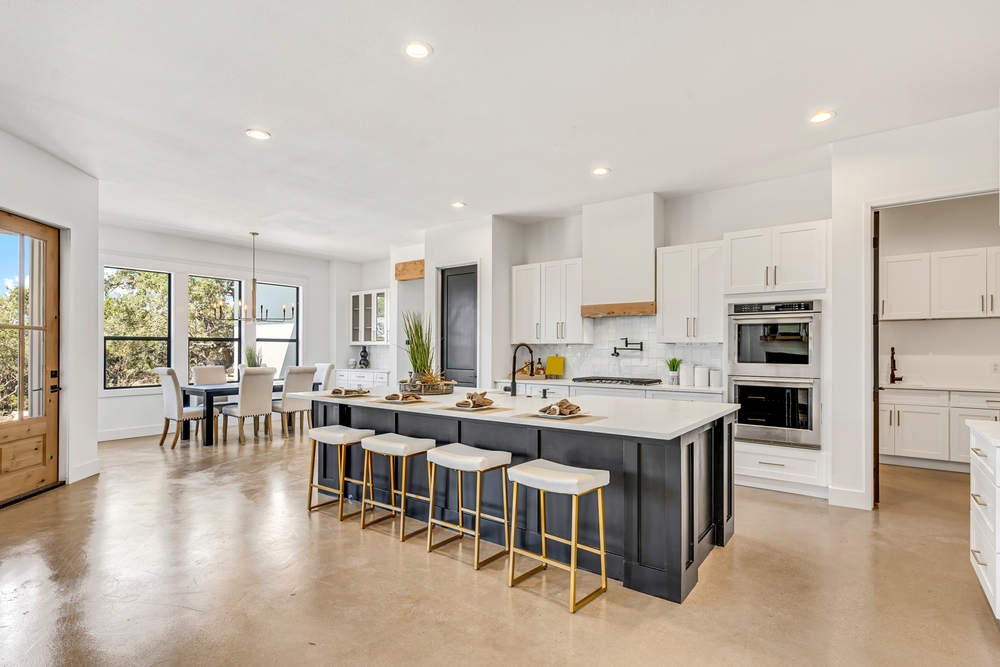
When you walk into your kitchen each morning in Gainesville, you should feel a sense of ease and purpose. Too many homeowners end up with kitchens that look beautiful in design magazines but fail to accommodate the way they actually cook, eat, and live. The difference between a stunning kitchen and a functional one often comes down to thoughtful design that considers your daily habits and routines. This guide will help you create a kitchen space in your Gainesville home that works as hard as you do.
Your Daily Kitchen Workflow
Before you start planning renovations or redesigning your kitchen layout, take time to observe how you actually use the space. Do you prepare breakfast for a large family every morning? Are you someone who cooks elaborate dinners on weekends? Maybe you mostly use your kitchen for quick meals and cleanup. Your unique routine should drive every design decision you make.
The most important concept in kitchen design is the work triangle: the relationship between your refrigerator, stove, and sink. These three elements form the core of your kitchen workflow. In Gainesville homes, where kitchens vary in size and layout, understanding how to optimize this triangle can make a significant difference in daily efficiency. Ideally, the total distance between these three appliances should be between 15 and 26 feet. However, the most critical element is that these spaces should be arranged to minimize backtracking and wasted motion during meal preparation.
Walk through your current kitchen and note where you spend the most time. Do you find yourself constantly moving between the refrigerator and counter? Are you struggling to access your most-used spices and cooking tools? Are you bumping into family members when multiple people cook simultaneously? These observations will help you identify problem areas and design solutions that address your specific needs.
Storage Solutions That Match Your Lifestyle
Storage is one of the most overlooked aspects of kitchen design, yet it dramatically affects daily functionality. Every item you use regularly should have a designated place that is easily accessible. In Gainesville homes, kitchen sizes can range from compact apartments to spacious family homes, so your storage strategy needs to fit your particular circumstances.
Consider creating zones for different activities. A baking station might include lower cabinets for flour and sugar, mid-level shelves for mixing bowls and measuring tools, and a nearby countertop for your mixer and rolling surface. A beverage station could consolidate your coffee maker, tea supplies, cups, and glasses in one convenient location. A cooking zone near your stove should contain your most frequently used pots, pans, spices, and oils.
Vertical storage is your friend, especially in Gainesville homes where kitchen square footage might be limited. Wall-mounted shelves, pegboards, and hanging racks can transform unused wall space into functional storage. Open shelving creates an airy feel while keeping items visible and accessible, though you need to honestly assess whether you will actually maintain this look. If you prefer closed storage, deep cabinets with pull-out drawers and lazy Susan organizers prevent items from getting lost in the back.
Don’t forget about the space above your cabinets. While top storage is less accessible, it works wonderfully for items you use seasonally or rarely. Shallow drawers in your base cabinets are more practical than deep ones because you can actually reach and see what’s inside. Consider dedicating one junk drawer to keep other spaces organized and intentional.
Counter Space and Meal Prep Areas
Adequate counter space is absolutely essential for a functional kitchen. Many home cooks in Gainesville find that they lack sufficient workspace for food preparation, mixing, and plating. As a general rule, you should have at least 24 inches of counter space on each side of your stove and at least 18 inches on one side of your sink.
Think about the flow of meal preparation from refrigerator to sink to stove to serving. Your counter layout should support this natural progression. Ideally, have a prep area near your refrigerator where you can unpack groceries and wash vegetables. Your main work zone near the sink allows for washing and draining. Your cooking zone at the stove should have heat-safe counter space nearby for setting down hot pots and pans.
Materials matter for daily usability. Granite and quartz are durable and handle heat well. Butcher block adds warmth but requires more maintenance. Laminate is budget-friendly and easier to clean. In Gainesville’s humid climate, choose materials that resist moisture and mildew. Whatever surface you select, ensure it is level and sturdy enough to support your kitchen mixer, food processor, and other heavy appliances you use regularly.
Lighting for Visibility and Ambiance
Most Gainesville homeowners underestimate the importance of proper kitchen lighting. You need bright task lighting where you actually prepare food, but you might also want dimmer ambient lighting for family gatherings. Poor lighting makes cooking feel like a chore and can lead to accidents and mistakes.
Layer your lighting with multiple sources. Overhead fixtures or recessed lights provide general illumination. Under-cabinet lights brighten your work surfaces where you chop, mix, and prepare ingredients. Pendant lights over an island add both task lighting and visual interest. A separate lighting circuit near your dining area allows you to adjust the mood when you transition from cooking to eating.
Natural light is valuable too. If your Gainesville kitchen has windows, maximize them without creating glare on countertops or screens. Large windows or skylights can make your kitchen feel bigger and more pleasant. However, ensure you have window treatments that allow you to control light and heat, particularly important during Gainesville’s hot summers.
Consider the color temperature of your bulbs. Cooler white light (4000K to 5000K) is ideal for task lighting where you need to see colors accurately. Warmer light (2700K) creates a more inviting atmosphere for dining areas. LED bulbs are energy-efficient and have excellent color rendering for food preparation.
Appliance Selection and Placement
Your appliances should enhance your workflow rather than complicate it. In Gainesville, where electricity costs vary seasonally, choosing energy-efficient models can reduce your utility bills while providing better performance. Think about what appliances you actually use regularly and prioritize quality there rather than investing in equipment you’ll rarely touch.
The height of your appliances matters for daily ease. Wall ovens placed at eye level reduce bending and are safer when removing hot items. Your refrigerator should be easily accessible from your main work area. Some Gainesville homeowners prefer a smaller primary refrigerator with an additional freezer drawer in an island for frequently used frozen items, reducing trips across the kitchen.
Microwave placement deserves consideration too. If you reheat food frequently, placing the microwave at counter level near a small eating area makes sense. If you rarely use it, a drawer microwave or over-the-range model saves valuable counter space. Dishwashers should be placed near your sink for convenient loading and within easy reach of your cabinet storage.
Creating Zones for Multiple Cooks
If your household includes multiple people cooking simultaneously, your kitchen design must accommodate this reality. Gainesville families often cook together during evening meal preparation or when hosting gatherings. Identify separate stations where people can work without constantly bumping into each other.
A well-designed zone includes its own prep space, access to heat or cold sources, and nearby storage. You might have a primary cooking station at the main stove, a secondary preparation area at the island, and a beverage zone near the refrigerator. Each area should feel somewhat independent while remaining connected to the overall kitchen layout.
Islands are incredibly valuable for multi-cook kitchens because they provide additional counter space and can include a secondary sink, cooktop, or storage. In Gainesville homes with open floor plans, an island naturally defines the kitchen area while providing functionality and flexibility.
Conclusion
A truly functional kitchen in your Gainesville home combines thoughtful layout, appropriate storage, adequate lighting, and honest assessment of your daily routines. By prioritizing how you actually live and cook rather than chasing trendy designs, you create a space that serves you well for years to come.
Need Custom Woodworking in Gainesville, GA?
Welcome to Covenant Woodworks! Established in 2003, Covenant Woodworks is a family-owned cabinet company located in Gainesville, Georgia and providing service to the surrounding areas. Whether new construction or remodeling, we make sure your project is finished according to schedule and is ready for you to move in! At Covenant Woodworks, our designs include cabinets, countertops, kitchen and bathroom remodeling, closets, custom hoods and vanities, offices, laundry and family rooms, and custom barn doors. Our team will offer you a blank slate for us to interpret your style and design. We work proactively to make sure your project is constructed and installed on time. Visit our website for more information, or give us a call today!