
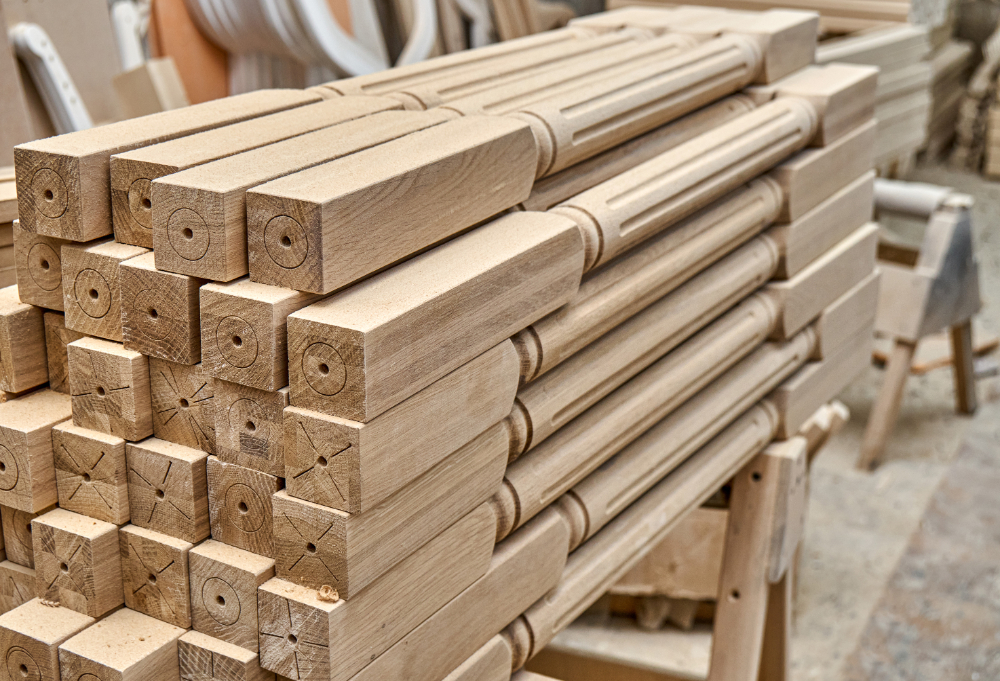
Choosing wood for a custom furniture project feels exciting at first. You flip through samples, fall in love with a color, and imagine how it will look in your home. But here is what most people never hear until after the piece is built: the wood you choose today will not look the same in five years. It will move, shift, deepen in color, and reveal its grain in ways that can either surprise you in the best way or leave you frustrated.
Understanding how different wood species behave over time is one of the most important decisions in custom woodwork for homes, and it rarely gets the attention it deserves.
The Living Nature of Wood and Why It Never Truly Stops Moving
Wood is a natural material, and that means it responds to its environment long after it has been cut, dried, and finished. Temperature changes, humidity levels, and seasonal shifts all cause wood fibers to expand and contract. This is called wood movement, and it varies significantly from one species to another.
Hardwoods like white oak and hard maple move more predictably than softwoods, but they still move. Quartersawn cuts reduce movement by changing the orientation of the grain relative to the board, which is why skilled craftspeople often recommend quartersawn lumber for custom wood cabinetry in kitchens or bathrooms where moisture fluctuations are common. Flatsawn lumber, on the other hand, shows a more dramatic cathedral grain pattern but can cup or warp more noticeably over time.
What this means in practice is that a wide panel built from flatsawn cherry might develop a slight bow after a few winters if the space is not climate controlled. That same panel built from quartersawn white oak will hold its shape far better. When you are investing in custom cabinetry design, understanding wood movement is not optional; it is foundational.
How Grain Pattern Affects the Visual Outcome You Actually Get
The grain of a wood species is not just a visual detail. It is a structural fingerprint that changes how light interacts with the surface, how stain absorbs unevenly, and how the finished piece reads from across a room.
Open-grained woods like red oak and ash have large, visible pores that create a strong texture even after finishing. They absorb stain in ways that can look uneven if the wood is not properly conditioned first. Close-grained woods like hard maple and cherry have tighter pores that take stain more evenly and produce a smoother, more refined surface.
This matters enormously when clients are choosing wood for cabinets in high-visibility spaces. A kitchen with painted cabinetry can hide grain variation well, but stained or natural-finish cabinetry puts the grain front and center. If you choose red oak hoping for a subtle, quiet look, you may be surprised by how boldly the grain asserts itself once the finish is applied. If you choose maple and expect a lot of visual movement and character, the tight grain may feel too plain.
The solution is to look at finished samples in your actual space, under your actual lighting, at multiple times of day. What looks warm and golden in a showroom can look flat and yellow under cool LED lights at home.
The Aging Process: Color Changes That Catch Homeowners Off Guard
This is the part that surprises people most. Many popular wood species change color dramatically over time, and not always in the direction you expect.
Cherry is the most well-known example. It starts out as a pale pinkish-tan color that some clients find underwhelming at first. But within one to two years of light exposure, cherry deepens into a rich reddish-brown that many woodworkers consider its most beautiful stage. If you choose cherry based on a fresh, unaged sample, the piece you receive will look noticeably different from the piece you see in your home five years later.
Walnut works in the opposite direction. Fresh walnut is a deep chocolate brown that many people find stunning. Over time, however, it lightens and becomes more of a medium golden-brown. Some clients love the way it matures; others feel like the richness they paid for has faded.
White oak tends to stay relatively stable, which is one reason it has become so popular in contemporary custom wood cabinetry. It ages gracefully without dramatic shifts, making it easier to predict long-term results. This predictability is valuable in custom cabinetry design projects where the goal is a timeless, consistent look that coordinates with other finishes in the home.
Pine and other softer woods age quickly and visibly, often developing a warm honey tone and deepening their grain contrast over the years. This can be charming in rustic or farmhouse-style spaces, but jarring in more formal settings.
Wood Species for Cabinets: Matching Hardness to Real-World Use
A wood that looks perfect in a showroom may not hold up to the demands of daily life. This is especially important in kitchens, mudrooms, laundry rooms, and other high-traffic areas where cabinets and furniture face constant impact, moisture, and abrasion.
The Janka hardness scale measures how resistant a wood species is to denting and surface wear. Hard maple sits near the top of the commonly used cabinet woods, making it an excellent choice for spaces where durability matters. White oak and hickory are also strong performers. Cherry and walnut, while beautiful, are softer by comparison and will show dents and dings more readily over time.
This does not mean soft woods are wrong for every application. In a bedroom wardrobe or a home office bookcase, softer woods can work beautifully because the wear demands are lower. But in a kitchen where pots, pans, and groceries bang against cabinet doors daily, wood species for cabinets should be chosen with hardness as a primary factor, not just an afterthought.
Finish selection also plays a role here. A harder topcoat can compensate partially for a softer wood species, but it cannot fully overcome the limitations of the material beneath it. The best results come from pairing an appropriate wood species with an appropriate finish for the intended use.
How to Have a Smarter Conversation With Your Woodworker
Most clients come to a custom woodworking consultation with a photo from a design website and a color swatch. That is a fine starting point, but the most successful projects come from clients who ask better questions.
Ask your woodworker to show you aged samples, not just fresh ones. Ask how the specific wood species behaves in your local climate, especially if you are in an area with dramatic seasonal humidity swings. If you are in a dry climate, wood movement will behave differently than it would in a humid coastal environment.
Ask about the cut of the lumber being used, not just the species. Ask what finish is recommended for that species in your specific use case. Ask what kind of maintenance the finish will require over time, and how the wood will respond if it is ever refinished years down the road.
These conversations are exactly what distinguishes a knowledgeable craftsperson from someone who simply builds to spec. When you invest in custom woodwork for homes, you deserve to understand not just what you are getting today, but how it will live with you over years and decades.
Conclusion
Choosing a wood species for custom furniture or custom cabinetry design is a long-term decision that goes far beyond color and cost. Grain, movement, hardness, and aging all shape the final result in ways that first-time buyers rarely anticipate. The more informed you are going into the process, the more likely you are to end up with a piece that looks even better a decade from now than it did the day it was installed.
Need Custom Woodworking in Gainesville, GA?
Welcome to Covenant Woodworks! Established in 2003, Covenant Woodworks is a family-owned cabinet company located in Gainesville, Georgia and providing service to the surrounding areas. Whether new construction or remodeling, we make sure your project is finished according to schedule and is ready for you to move in! At Covenant Woodworks, our designs include cabinets, countertops, kitchen and bathroom remodeling, closets, custom hoods and vanities, offices, laundry and family rooms, and custom barn doors. Our team will offer you a blank slate for us to interpret your style and design. We work proactively to make sure your project is constructed and installed on time. Visit our website for more information, or give us a call today!