
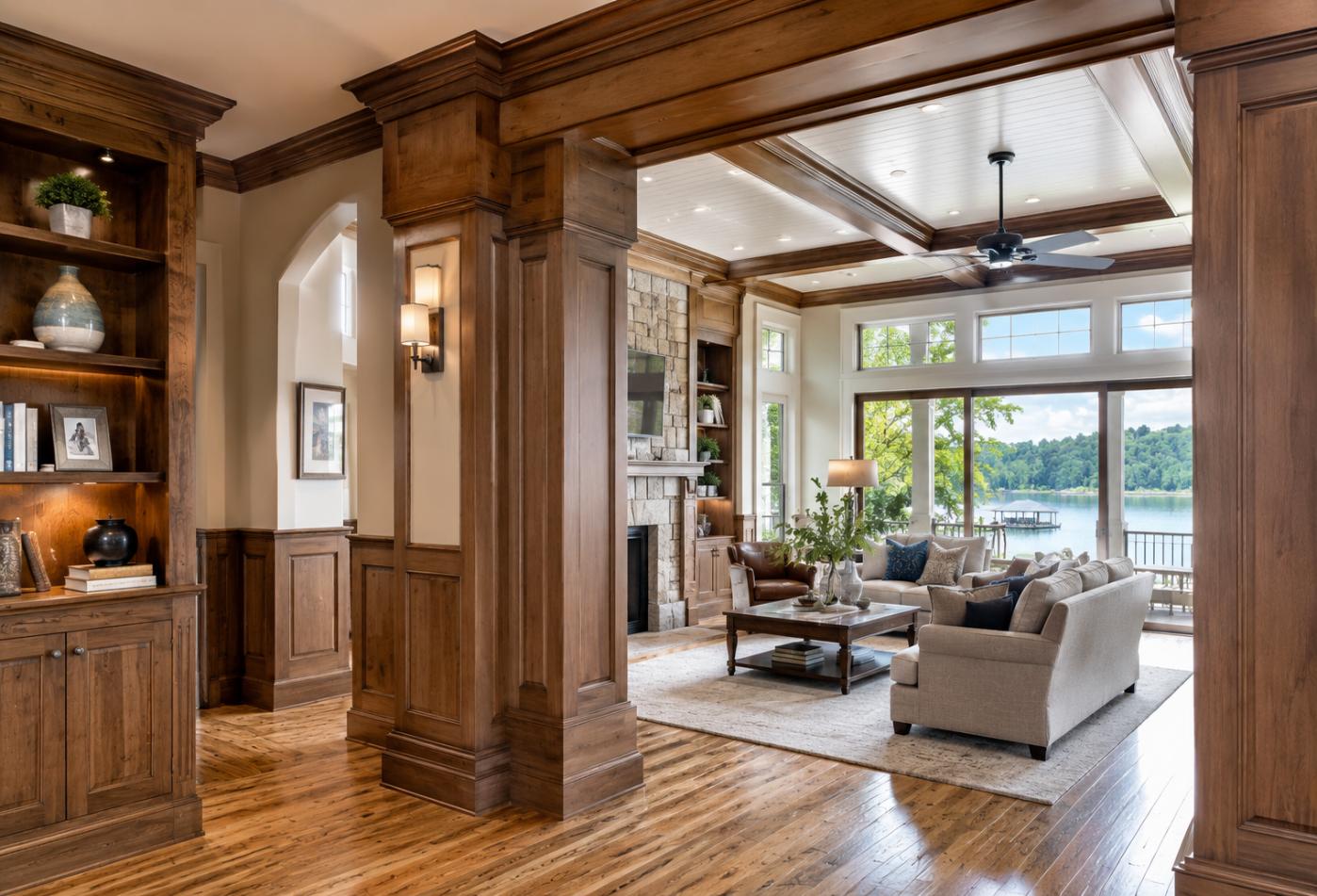
Life around Lake Lanier comes with beautiful views, wooded landscapes, and plenty of moisture in the air. That same humidity that makes North Georgia so lush can also take a toll on interior woodwork, especially when homes rely on mass-produced trim that was never designed for the region’s climate.
Quick Answer
Custom hardwood architectural millwork generally outperforms stock trim in Lake Lanier homes because it can be crafted from carefully selected hardwoods, properly acclimated before installation, and built to match the home’s unique conditions. While stock trim is designed for broad distribution and standard dimensions, custom millwork offers better fit, longer-lasting performance, and a more refined appearance in North Georgia’s humid environment.
What Local Readers Should Know
-
Humidity around Lake Lanier can cause wood products to expand and contract throughout the year.
-
Custom millwork can be designed specifically for the architectural style and dimensions of your home instead of relying on standard sizes.
-
Homes in Gainesville, Flowery Branch, and surrounding Hall County often benefit from materials that are properly acclimated before installation.
-
Hardwood species respond differently to moisture, making material selection just as important as craftsmanship.
-
Proper installation and finishing play a major role in how well architectural woodwork performs over time.
Why This Matters Locally
Custom millwork matters because North Georgia presents unique environmental challenges that homeowners elsewhere may not experience. Lake Lanier contributes to elevated humidity levels during much of the year, while seasonal temperature swings create ongoing expansion and contraction in natural wood products.
Many homes throughout Gainesville, Dawsonville, Oakwood, and Clermont also feature open floor plans, vaulted ceilings, and large windows that expose interior trim to changing moisture levels and sunlight throughout the day. Choosing architectural millwork designed for these local conditions helps preserve both appearance and structural integrity.
At Covenant Woodworks, we believe every piece of architectural millwork should complement both the home’s design and the environment it lives in. Rather than treating trim as a finishing detail, we approach it as a lasting architectural feature.
Local Field Observations
Professional experience throughout Hall County consistently shows that moisture-related movement is one of the biggest challenges affecting interior woodwork. While properly installed trim naturally expands and contracts to some degree, stock products often arrive with limited material options and standardized profiles that may not perform as well in local conditions.
Homes located closer to Lake Lanier frequently experience slightly higher indoor humidity, particularly during late spring through early fall. Combined with modern HVAC systems cycling throughout the year, these changing conditions make careful material selection especially valuable.
How Humidity Affects Interior Millwork
Humidity affects wood because it naturally absorbs and releases moisture from the surrounding air. As moisture levels change, wood expands across its width and contracts as it dries.
For homeowners, this can result in:
-
Small gaps at joints
-
Separation between trim pieces
-
Visible nail movement
-
Paint or finish cracking
-
Warping or twisting
-
Uneven reveals around doors and windows
While no wood product is completely immune to seasonal movement, custom hardwood millwork can be designed and installed with these natural characteristics in mind.
Warning Signs Your Trim May Not Be Holding Up
Several signs suggest existing trim may be struggling with North Georgia’s climate.
-
Corners opening at miter joints
-
Visible gaps where trim meets walls
-
Cracked caulk appearing repeatedly
-
Paint separating along seams
-
Baseboards pulling away from flooring
-
Window or door casings showing movement
-
Warped or cupped trim profiles
These issues are often cosmetic at first but may become more noticeable over multiple seasonal cycles.
When to Call a Professional
Professional evaluation is recommended when trim movement becomes persistent or widespread. While homeowners can monitor small seasonal gaps, recurring separation, significant warping, or deteriorating finishes often indicate that the material, installation, or moisture management should be reviewed.
A professional can determine whether repairs are appropriate or whether replacing sections with custom millwork offers a better long-term solution.
Common Local Causes
Several local conditions contribute to trim performance throughout the Lake Lanier region.
1. Elevated Humidity
Lake-influenced moisture creates longer periods of high humidity than many inland locations experience.
2. Seasonal Temperature Swings
North Georgia transitions between humid summers and cooler winters, causing continual wood movement.
3. Standardized Stock Materials
Mass-produced trim is manufactured to fit broad markets rather than individual homes or regional climate conditions.
4. Large Custom Homes
Many homes around Lake Lanier feature expansive interiors, tall ceilings, and oversized openings that benefit from proportionally designed millwork.
5. Material Selection
Different hardwood species respond differently to environmental changes, making species selection an important part of long-term performance.
Prevention and Maintenance
Preventing moisture-related trim issues begins with thoughtful planning.
Homeowners can help preserve architectural millwork by:
-
Maintaining consistent indoor humidity levels.
-
Addressing roof or plumbing leaks promptly.
-
Allowing new wood products to acclimate before installation.
-
Cleaning finished wood with appropriate products.
-
Inspecting joints seasonally for early movement.
Professional refinishing or touch-up work can also extend the life and appearance of quality millwork.
What to Expect from Custom Hardwood Millwork
Custom hardwood architectural millwork provides benefits that extend beyond appearance.
Homeowners can typically expect:
-
Cleaner, more precise installation
-
Profiles tailored to the home’s architecture
-
Better transitions around doors, windows, and built-ins
-
Improved visual consistency
-
Greater flexibility in wood species and finish selection
Because each project is built specifically for the home, the finished result often feels integrated into the architecture rather than added as a standard finishing product.
Common Mistakes
Choosing solely by price
Lower-cost stock trim may save money initially but may require more repairs or replacement over time.
Ignoring humidity control
Even premium wood products benefit from stable indoor humidity.
Mixing inconsistent trim profiles
Replacing damaged sections with mismatched stock profiles can create noticeable visual differences throughout the home.
Skipping professional installation
Even high-quality millwork performs best when installed with proper techniques that account for seasonal wood movement.
Common Local Scenario
A homeowner renovating an older Lake Lanier property wants to preserve the home’s character while updating its interior finishes. Standard trim profiles available through large retailers do not match the original architectural details, leaving noticeable inconsistencies throughout the home.
Custom hardwood millwork allows the existing design language to continue seamlessly while providing new materials crafted for today’s performance expectations.
Related Service Solutions
Architectural millwork often works alongside several other custom woodworking services, including:
-
Custom crown moulding
-
Interior door casings
-
Baseboards
-
Wainscoting
-
Coffered ceilings
-
Fireplace surrounds
-
Built-in cabinetry
-
Decorative wood paneling
Together, these elements create cohesive interiors that reflect the home’s architectural style.
Comparing Your Options
| Option | Advantages | Considerations |
|---|---|---|
| Stock Trim | Lower upfront cost and readily available | Limited profiles, standard sizing, fewer customization options |
| Custom Hardwood Millwork | Tailored fit, premium craftsmanship, architectural consistency | Higher initial investment with greater design flexibility |
| Repair Existing Trim | Lower immediate expense | May not address underlying performance or design limitations |
| Full Millwork Upgrade | Consistent appearance throughout the home | Best suited for renovations or new construction |
Service Areas
We proudly serve homeowners throughout Gainesville, Lake Lanier, Hall County, Flowery Branch, Oakwood, Dawsonville, Clermont, and surrounding North Georgia communities. Every project is designed with local homes, regional climate conditions, and long-term craftsmanship in mind.
The Cost of Ignoring the Issue
Delaying attention to deteriorating trim can allow cosmetic issues to become more noticeable over time. Gaps, finish failures, and repeated repairs may gradually affect the appearance of otherwise well-maintained interiors.
Addressing concerns early often provides more options and helps preserve the overall quality of the home’s architectural details.
Frequently Asked Questions
Does humidity around Lake Lanier really affect interior trim?
Yes. Elevated humidity around Lake Lanier contributes to natural expansion and contraction in wood products. Proper material selection, acclimation, installation, and finishing all help improve long-term performance.
Why is custom millwork popular in Gainesville homes?
Custom millwork is popular because many Gainesville homes feature unique architectural details that standard trim cannot easily match. It also allows homeowners to choose materials and profiles appropriate for their design goals.
Is hardwood better than MDF for humid environments?
Hardwood and MDF each have appropriate applications. Hardwood offers natural beauty and durability, while material selection should always consider the specific location, intended use, and environmental conditions.
Can custom trim match older homes in Hall County?
Yes. Skilled craftsmen can often recreate or closely match historic trim profiles, helping preserve the architectural character of older homes during renovations.
Does custom millwork increase home value?
Quality architectural millwork may enhance a home’s visual appeal and craftsmanship. While every property is different, thoughtful custom woodwork is often viewed as a premium interior feature.
How often should interior millwork be inspected?
A yearly inspection is generally a good practice. Homeowners should also check trim after unusually humid summers or significant seasonal changes to identify movement early.
Can custom millwork be installed during a renovation?
Yes. Custom millwork is frequently incorporated into remodeling projects, additions, and whole-home renovations throughout North Georgia.
Why does stock trim sometimes develop gaps?
Stock trim can develop gaps as wood naturally responds to seasonal moisture changes. Proper installation techniques and suitable material selection help minimize visible movement.
Closing
Beautiful architectural millwork should do more than finish a room. It should complement the home’s design while standing up to the environmental conditions unique to North Georgia. Choosing custom hardwood millwork provides homeowners with craftsmanship, precision, and lasting architectural character that stock trim often cannot match.
Protect Your Home with Custom Architectural Millwork
Thoughtfully crafted woodwork is an investment in both the beauty and longevity of your home.